

Small Molecule Inhibitor Boosting The Efficacy Of Therapeutic Ionizing Radiation
SUMMARY
-
Radiotherapy and immunotherapy are used to treat many cancer types, yet only 50% and 20% of patients respond, respectively. Resistance to therapy presents a large problem.
-
N6-methyladenosine (m6A) modification is commonly found in on RNA in eukaryotic cells. By binding to m6A sites, YTHDF2 (YTH N6-Methyladenosine RNA Binding Protein 2) modulates the translation efficiency of RNA transcripts, thereby leading to RNA degradation.
-
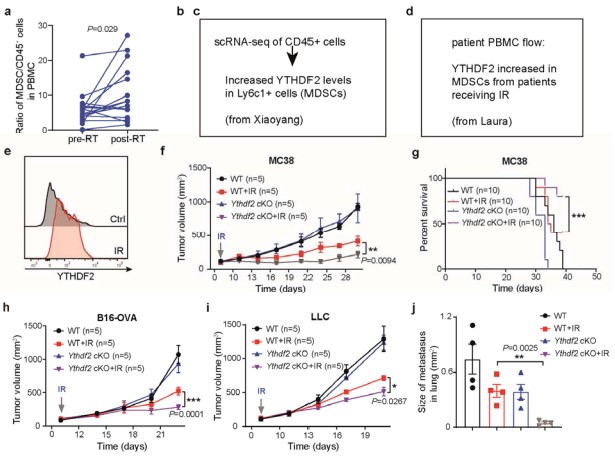
YTHDF2 expression is induced by radiation and immunotherapy, and negatively correlates with patient survival (analysis from cancer database). The faculty inventor demonstrated a novel approach where inhibition or deletion of YTHDF2, either by inhibition or genetic manipulation of host cells, enhances efficacy of radiation or immunotherapy. Therefore, manipulation of YTHDF2 in immuno- and radiotherapy may lead to overcoming therapy resistance.
-
Additionally, there are several current clinical trials to alleviate immunosuppression during chemo-radio or immunotherapies. Trials focusing on depleting or altering myeloid derived suppressive cells (MDSCs) have so far been ineffective. Ipilimumab depletion of regulatory T cells has shown a 20% long-term survival benefit. The innovated strategy of modulating YTHDF2 in cancer therapy will alleviate suppression from both MDSCs and Tregs, synergizing with radio- and immunotherapy, opening a new avenue in clinical cancer treatment.
FIGURE
ADVANTAGES
ADVANTAGES
-
Addressed poor patient response to radio- and immunotherapy by overcoming barriers of suppressive cells to improve the adaptive immune response.
-
Reduces radiation-induced metastases.
-
Better therapies to alleviate immunosuppression.
APPLICATIONS
- Radiotherapy
- Immunotherapy
- Enhances the antitumor immunity and therapeutic efficacy of radiation and immune checkpoint inhibitors
PUBLICATIONS
- Manuscript in review
- In vivo mouse models