

A Biomarker Platform for Predicting Carboplatin Sensitivity and Enabling Targeted Ovarian Cancer Immunotherapy
SUMMARY
- The field of oncological diagnostics and therapeutics has long sought methods to refine treatment approaches for aggressive cancers. In conditions such as advanced high-grade ovarian cancer, there is a critical need for techniques that can accurately predict therapeutic responses and guide personalized treatment decisions. This is driven by the limitations of conventional treatments which often employ blanket strategies that may not account for the molecular diversity of tumors. The absence of reliable predictive indicators for chemotherapy efficacy and tailored immunotherapies underscores the urgency for advanced diagnostic and treatment tools.
-
Current approaches are hampered by a lack of specificity and sensitivity in identifying those patients who will benefit from existing therapies. Standard chemotherapeutic regimens can result in significant toxicities without guaranteeing improved outcomes, and the heterogeneity of tumor cell populations further complicates effective patient stratification. Additionally, conventional methods do not adequately address the propensity of tumors to develop resistance to treatment. These challenges have created a pressing need for innovative strategies that can detect subtle biomarkers indicative of drug response, paving the way for more targeted and efficacious therapeutic interventions.
-
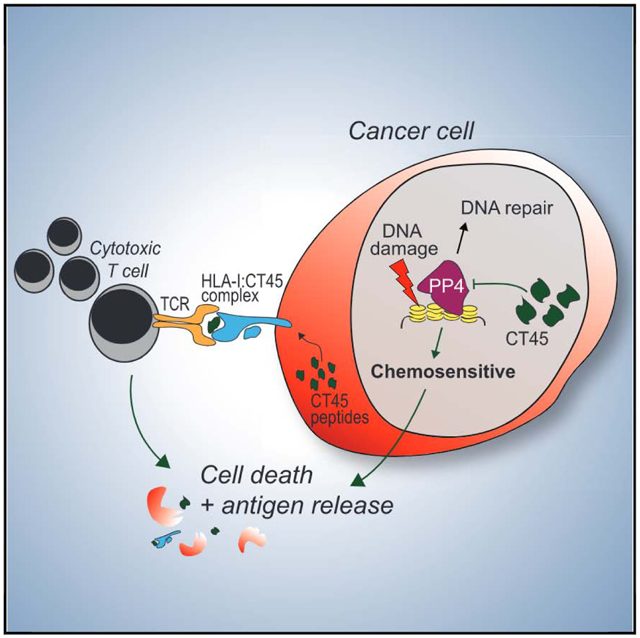
The faculty inventor leveraged CT45A family proteins as a biomarker to predict carboplatin sensitivity, while also serving as a target for T-cell–based therapies in high-grade serous ovarian cancer. It features the ability to induce CT45A expression in tumors initially lacking it by using DNA methyltransferase inhibitors. Key HLA class I peptides were identified for their specific binding to HLA alleles, facilitating adoptive T-cell transfer, vaccine development, and CAR T-cell applications. This dual functionality supports both diagnostic assessments and personalized treatment regimens.
-
By establishing CT45A as an independent prognostic indicator through advanced analytical techniques such as liquid chromatography mass spectrometry and immunohistochemistry, it offers precise treatment guidance. Additionally, the approach of inducing antigen expression in non-expressing tumors broadens therapeutic opportunities, establishing an adaptable, personalized strategy for addressing treatment resistance and enhancing clinical outcomes in ovarian cancer patients.
FIGURE
ADVANTAGES
ADVANTAGES
-
Enables personalized treatment through simultaneous diagnostic and therapeutic targeting in HGSOC
-
Predicts carboplatin sensitivity, facilitating optimized chemotherapy decisions
-
Offers versatile immunotherapy options, including adoptive T-cell transfer, vaccines, and CAR T-cell therapies
-
Utilizes DNA methyltransferase inhibitors to induce CT45A expression, improving response in CT45A-negative tumors
-
Improves patient stratification and prognostic assessment for advanced-stage ovarian cancer
APPLICATIONS
- Diagnostic biomarker
- T-cell therapy development
- CAR T-cell targeting
- Patient stratification
PUBLICATIONS