

Oral Systemically-Bioavailable Butyrate For Treating Inflammatory Diseases
SUMMARY
Method to attach butyrate to amino acids, allowing it to bypass gut metabolism and enter the bloodstream, increasing its bioavailability and enabling effective treatment of inflammatory, immune, and neurological conditions throughout the body, including the brain
The Unmet Need: Methods to use microbial metabolites as therapeutic agents
- Butyrate is a naturally occurring short-chain fatty acid produced by microbial fermentation in the distal gut. It plays a crucial role in maintaining intestinal homeostasis and acting as a primary energy source for colonocytes. Beyond the gut, butyrate functions as a histone deacetylase inhibitor and grants broad anti-inflammatory and immune-modulating capabilities. Because of these versatile biological activities, there is a significant clinical need to utilize butyrate as a therapeutic agent. Delivering this metabolite effectively could offer promising treatments for systemic conditions, including inflammatory bowel disease, multiple sclerosis, Alzheimer's disease, and metabolic disorders.
-
Despite its immense therapeutic potential, leveraging butyrate through conventional oral supplementation presents severe limitations. The primary obstacle is its exceptionally low systemic bioavailability. Because butyrate is heavily consumed by colonocytes as their main energy substrate, very little of the orally administered metabolite escapes local gut metabolism to enter the bloodstream. Consequently, standard formulations fail to achieve therapeutic concentrations in systemic circulation or reach distant target organs like the brain and lymphoid tissues. Furthermore, current oral approaches, such as sodium butyrate, are notoriously difficult for patients to tolerate due to their highly offensive odor and unpleasant taste.
- The faculty inventor introduced a novel solution conjugating butyrate, a beneficial short-chain fatty acid, to hydroxyl-bearing amino acids like serine, threonine, and tyrosine. Synthesized using trifluoroacetic acid and butyryl chloride, the process creates water-soluble butyrate esters. These specialized conjugates utilize natural amino acid transporters to travel efficiently through the bloodstream and cross the blood-brain barrier. Once distributed, the ester bonds are cleaved enzymatically and nonenzymatically, releasing bioactive butyrate directly into cellular environments. This mechanism allows the therapeutic compound to reach critical areas such as the liver, spleen, lymph nodes, brain, and spinal cord.
-
This solution is highly differentiated because it overcomes the severe limitations of standard oral butyrate supplementation, which suffers from poor taste, foul odor, and extremely low systemic bioavailability. Normally, butyrate is rapidly consumed by colonocytes in the gut, preventing it from reaching the rest of the body. By masking the molecule within an amino acid conjugate, this technology enables the compound to bypass gut metabolism entirely and enter systemic circulation. This breakthrough distribution unlocks butyrate's powerful anti-inflammatory properties for previously inaccessible systemic conditions, offering a viable therapeutic pathway for complex disorders like multiple sclerosis, Alzheimer's disease, and rheumatoid arthritis.
FIGURE
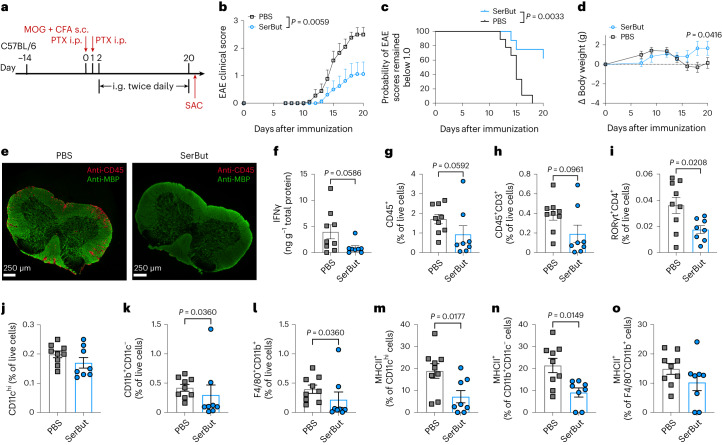 Twice-daily gavage of SerBut post-EAE induction suppressed disease progression
ADVANTAGES
ADVANTAGES
-
Significantly increases systemic bioavailability
-
Successfully crosses the blood-brain barrier via amino acid transporters
-
Enables widespread distribution and accumulation of active butyrate in critical organs and tissues, including the liver, spleen, and mesenteric lymph nodes
-
Highly water-soluble compounds that overcome the unpleasant odor and taste challenges of traditional oral sodium butyrate supplements
-
Serves as a versatile platform technology that can be adapted to deliver other beneficial microbial metabolites, such as acetate, propionate, and valerate
APPLICATIONS
-
Neurodegenerative disease
-
Systemic autoimmune disease
-
Inflammatory bowel disease
-
Metabolic liver disease
-
Bioavailable oral butyrate supplements