

Genetic Engineering Tools To Stimulate And Enhance The Production Of Select Compounds From Bacterial Species
SUMMARY
Synthetic biology toolsets to genetically manipulate the microbiota, specifically non-model resident gut microbes, to alter gene expression and cellular function to produce therapeutic compounds.
- The field of synthetic biology has seen significant advancements in recent years, particularly in the engineering of microbial species to produce compounds beneficial to human health. Genetic engineering applications have traditionally focused on model gut residents, such as Escherichia coli and lactic acid bacteria. However, emerging efforts by which to develop synthetic biology toolsets for “nonmodel” resident gut microbes could provide an improved foundation for microbiome engineering.
-
One promising family of bacteria in this domain is Lachnospiraceae, which naturally produce various therapeutic molecules. These bacteria are part of the human gut microbiome and have been linked to numerous health benefits, such as anti-inflammatory effects and enhanced gut health. However, to fully harness their potential, there is a need for precise genetic tools that can control and enhance their ability to produce specific compounds. Developing such tools would enable more effective therapeutic applications and open new avenues for biotechnological innovations.
-
Current approaches to genetically engineer Lachnospiraceae bacteria face several challenges. While genetic tools like promoter systems, inducible systems, and secretion pathways have been developed for other microbial species, these tools have not been systematically tailored for Lachnospiraceae. Existing methods often lack the specificity and efficiency required to control gene expression and protein secretion in these bacteria. These limitations highlight the need for specialized genetic tools to unlock the full potential of Lachnospiraceae in synthetic biology applications.
- The faculty inventor, Mark Mimee, developed a collection of genetic tools and methodologies designed to engineer bacterial species from the Lachnospiraceae family. These tools include various molecular components that can modify the bacteria's ability to produce specific compounds with therapeutic potential. The technology provides a detailed framework for generating promoters, inducible systems, and secretion pathways tailored for synthetic biology applications within this bacterial family.
FIGURE
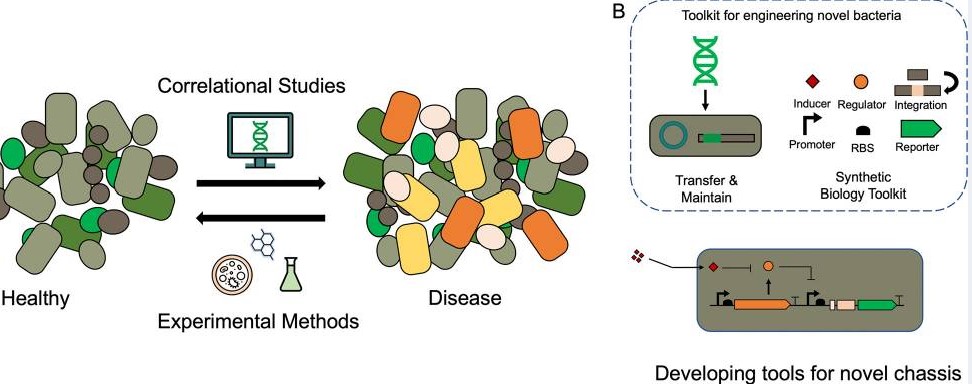
Increasing microbiome knowledge enables the engineering of novel bacterial species. An increased number of (A) correlational studies have linked shifts from a healthy gut to various disease states to corresponding changes in the gut microbiota. Recently developed experimental and predictive methods that explore this correlational information can be used to understand factors pertaining to healthy microbiota states and to generate (B) genetic tools with which novel bacterial chassis in the microbiome can be tamed. These tools include, but are not limited to, plasmids and genome integration strategies for the transfer and maintenance of genetic material as well as parts from synthetic biology toolkits to control gene expression, such as promoters and ribosome binding sites (RBS).
ADVANTAGES
ADVANTAGES
-
Refines promoter selection for better gene expression control
-
Introduces inducible systems for external regulation of gene expression
-
Utilizes both native and synthetic secretion systems for targeted protein production and secretion
APPLICATIONS
- Live biotherapeutics
- Drug development
- Research tools