

New Platform For Targeted Immunomodulation And Vaccine Development
SUMMARY
- There have been significant research efforts to develop effective vaccines that elicit a strong and durable T cell response against intracellular pathogens and cancer. A popular strategy has been to enhance vaccination efficacy by targeting dendritic cells (DCs).
- For DCs, functional heterogeneity is critical in the complex process of initiating adaptive immune responses and with recent advances in single-cell immune profiles, research efforts have focused on parsing DC subpopulations to better understand the full spectrum of DC functionality.
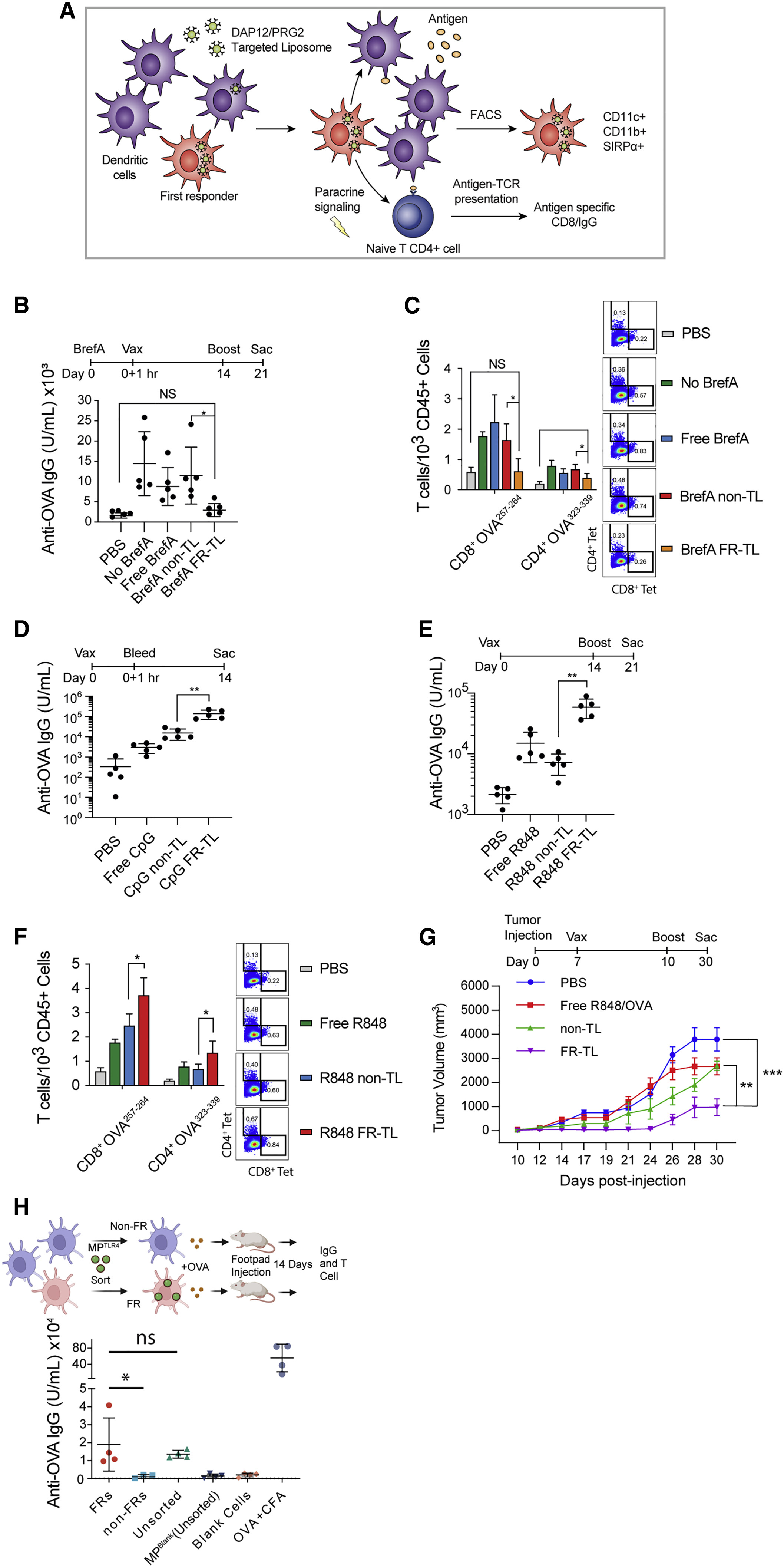
- Researchers at UChicago identified and isolated “first responders”, a temporal substate of DCs, from conventional DCs after discovering two distinctive cell surface markers, DAP12 and PRG2. These cells contribute disproportionately to the bulk stimulation of innate immune cells after Toll-like receptor 4 (TLR4) stimulation secreting the majority of initial TNF-α.
- The faculty inventor has developed a method to target first responders with ligand (against cell surface markets)-conjugated liposomes to modulate immune responses by incorporating adjuvants to improve vaccine response or immunomodulator to prevent vaccination responses.
FIGURE
ADVANTAGES
ADVANTAGES
- Selective targeting cells that facilitate adaptive immune responses, reduce usage of vaccine material and reach these cells more reliably
- Temporally controlled cell population that influences downstream immune responses
- Improvement/depletion in vaccines responses depending on the type of compound co-administered
APPLICATIONS
- Immunotherapy
- Vaccine development
- Enhance conventional responses to adjuvants
- Small molecules
PUBLICATIONS
- In vivo validation of FR targeting, increased TLR activation, and coordinated local antigen presenting cell activation