

Boosting Cancer Immunotherapy Or Radio-Immunotherapy For Enhanced Tumor Eradication
SUMMARY
New cancer therapy to enhance the efficacy of checkpoint inhibitor immunotherapy and radiation by blocking tumor-promoting signals from erythroid progenitor cells, which secrete artemin to advance cancer progression. This approach targets artemin and its signaling axis to improve treatment outcomes.
The problem: Tumor cells exploit numerous signaling pathways to promote malignant progression including tumor-promoting signals from erythroid progenitor cells
- Cancer therapy has undergone significant advancements with the emergence of immunotherapies, particularly checkpoint inhibitors, which have shown the capacity to improve survival rates among cancer patients. However, these therapies still face limitations due to low response rates. Cancer's complexity arises from its ability to orchestrate systemic changes in the body, which support its progression and resistance to treatment. One example is cancer-driven modification of the erythropoiesis process, which results in the overproduction of artemin, a growth signal that enhances tumor progression. Incorporating the blockade of these growth signals, along with existing therapies, could potentially augment the effectiveness of checkpoint inhibitors and radiotherapy.
-
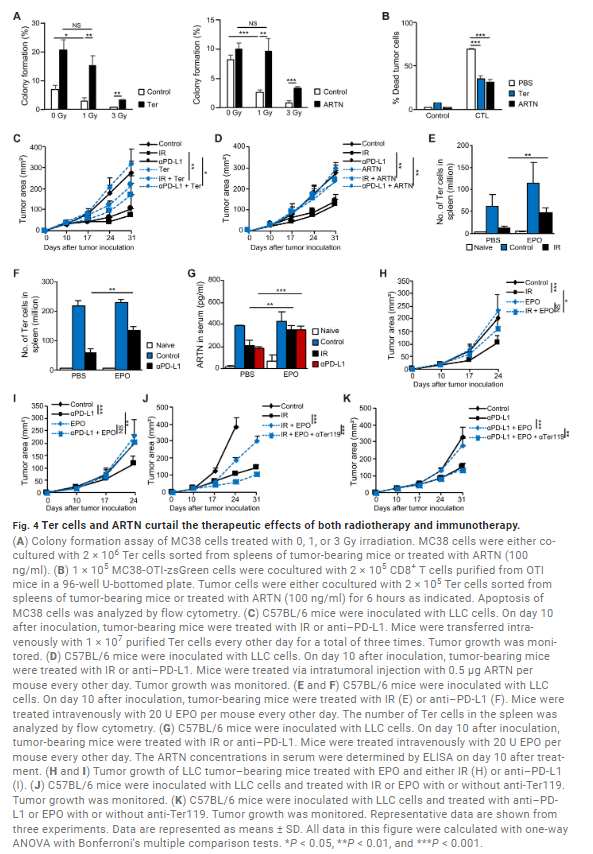
Current approaches in cancer therapy, while groundbreaking, are not devoid of challenges. Radiotherapy, although widely used, often faces resistance that limits its efficacy. Similarly, the effectiveness of immune checkpoint inhibitors varies greatly among patients, with many experiencing minimal benefits. A key factor in this resistance is the presence of erythroid progenitor cells (EPCs), specifically CD45-Ter119+CD71+ cells, termed Ter-cells, which secrete artemin and activate signaling pathways that promote tumor growth and therapy resistance.
-
These mechanisms highlight a critical obstacle: the failure of therapies to target and mitigate the contributions of these EPCs, thus hindering their full therapeutic potential. Addressing these challenges requires a comprehensive approach that targets the underlying mechanisms of resistance to improve treatment outcomes overall.
The proposed solution: Strategy to block the Ter cell-artemin axis to promote the therapeutic effects of both radiotherapy and immune checkpoint blockade
-
The faculty inventor, Ralph Weichselbaum, presents a novel cancer therapy that integrates the blockade of tumor-induced cancer-promoting signals with checkpoint inhibitor immunotherapy to achieve enhanced efficacy. Traditional immunotherapies that utilize immune checkpoint inhibitors have indeed improved survival rates among cancer patients, but response rates remain limited. This therapy targets the overproduction of artemin, a neurotropic peptide secreted by tumor-induced erythroid progenitor cells (Ter-cells), which facilitates cancer progression through RET signaling. By combining the blockade of these growth signals with checkpoint inhibitors such as anti-PD-L1, the therapy not only augments the immunotherapy but also enhances radiation-immunotherapy, leading to increased tumor regression and improved patient outcomes as evidenced by decreased Ter-cell and artemin levels.
-
This synergistic effect not only provides a more holistic approach to cancer treatment but also opens avenues for tackling immuno-resistant tumors, thereby offering a promising strategy to intensify the efficacy of existing cancer treatments.
ADVANTAGES
ADVANTAGES
-
Combines tumor-induced signal blockade with checkpoint inhibitor immunotherapy for higher efficacy
-
Improves patient outcomes by enhancing anti-tumor immune response and reducing resistance to radiotherapy and immunotherapy
-
Augments radiotherapy and immunotherapy by targeting tumor-promoting erythroid progenitor cells and artemin signaling
APPLICATIONS
- Radiotherapy
- Immunotherapy