

Nanoscale Metal-Organic Frameworks For X-Ray Triggered Combination Cancer Therapy
SUMMARY
A nanoscale metal-organic framework uses heavy metals to enhance X-ray absorption, triggering prodrug activation for precise cancer treatment by combining radiotherapy, chemotherapy, and immunotherapy with reduced systemic toxicity.
- The field of targeted cancer treatment has seen significant advancements with the integration of multiple therapeutic modalities such as radiotherapy, chemotherapy, and immunotherapy. Clinicians and researchers have long recognized the need for precise treatment methods that can effectively engage with tumorous tissues while sparing healthy cells. This demand has driven exploration into sophisticated drug delivery systems that offer controlled activation mechanisms, addressing shortcomings in existing therapies by aiming for simultaneous and localized effects.
-
Current treatment approaches, however, still face considerable challenges. Standard chemotherapeutics often lack specificity, leading to systemic toxicity and adverse side effects, while conventional radiotherapy may inadvertently impact surrounding healthy tissue. Additionally, achieving effective immunomodulation remains elusive in many cases due to the diffuse nature of drug distribution. The combination of these modalities using traditional methods is hindered by limitations in synchronizing their therapeutic actions, ultimately reducing treatment efficacy and increasing the risk of collateral damage.
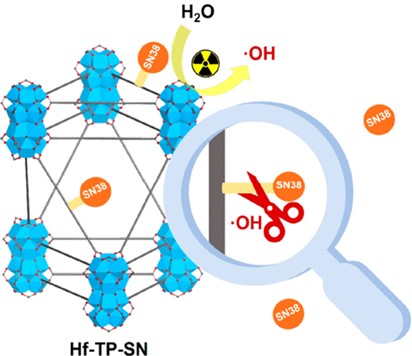
- The faculty inventor employed nanoscale metal-organic frameworks (nMOFs) engineered with X-ray sensitive prodrugs that integrate radiotherapy, chemotherapy, and immunotherapy modalities into a unified platform. It features metal-based secondary building units, such as Hf12 clusters, which absorb X-ray radiation to generate reactive oxygen species that initiate bond cleavage in attached therapeutic agents. The covalent linkage between the framework and prodrug—including agents like SN38 and innate immune modulators—allows for targeted activation. This design facilitates controlled drug release solely at the site of X-ray exposure, reducing systemic exposure and collateral toxicity.
-
What sets this approach apart is its precision and efficiency in therapeutic delivery. The use of heavy metal clusters not only amplifies radiotherapy effects by enhancing energy deposition but also triggers a cascade—starting with hydroxyl radical formation and followed by a 1,4-elimination reaction—that ensures robust on-demand drug activation. This synergy results in significantly improved cancer cell cytotoxicity while simultaneously minimizing side effects, as demonstrated in both in vitro and in vivo studies. The integration of multiple treatment modalities, optimized for localized tumor targeting, distinguishes this system as a promising advancement in cancer therapy.
FIGURE
ADVANTAGES
ADVANTAGES
-
On-demand activation of therapeutic agents at tumor sites using X-ray irradiation for targeted treatment
-
Enhanced radiotherapy efficiency via heavy metal-based nMOFs that increase reactive oxygen species (ROS) generation
-
Synergistic integration of radiotherapy, chemotherapy, and immunotherapy into one platform for improved outcomes
-
Reduced systemic toxicity and minimized off-target effects compared to conventional treatments
APPLICATIONS
-
Targeted cancer radiotherapy
-
X-ray triggered drug delivery
-
Combination treatment platform
-
Integrated multimodal therapy
PUBLICATIONS
- Demonstrated effective tumor growth inhibition in preclinical studies, highlighting its potential in cancer therapy