

Lymphangiogenesis For Therapeutic Immunomodulation
SUMMARY
A vaccine platform that uses engineered lymphangiogenesis factors and antigens to stimulate lymphatic endothelial cells, creating strong, long-lasting immune memory or tolerance with fewer side effects than traditional vaccines
The Unmet Need: Targeted and durable immune modulation while minimizing systemic toxicity
- The field of vaccine development and immunotherapy is critical for combating infectious diseases, cancer, and immune-mediated disorders. Traditional vaccination strategies primarily focus on stimulating robust immune responses by targeting professional antigen-presenting cells (APCs), such as dendritic cells, to generate effector T cells and antibodies. However, there remains a significant need for technologies that can not only elicit strong immediate immune protection but also establish durable immunological memory, which is essential for long-term defense against recurring or persistent threats. Additionally, there is a growing interest in approaches that can induce immune tolerance for treating conditions like allergies and autoimmune diseases, where the immune system must be selectively desensitized to specific antigens without compromising overall immunity.
-
Current vaccine and immunotherapy approaches face several limitations. Many conventional vaccines induce strong initial immune responses but often fail to generate long-lasting memory T cells, leaving individuals susceptible to reinfection or disease relapse. Furthermore, systemic administration of immune-activating agents can lead to widespread inflammation and adverse side effects, reducing their safety and tolerability. Approaches that rely on dendritic cell targeting may not be effective in immune-suppressive environments, such as within tumors or in chronic infections, where dendritic cell function is impaired. Moreover, existing methods for inducing immune tolerance are often non-specific and can result in generalized immune suppression, increasing the risk of infections.
- The faculty inventor developed an advanced vaccine platform that harnesses the unique antigen-presenting capabilities of lymphatic endothelial cells (LECs) to generate robust and long-lasting immunological memory. By co-administering a lymphangiogenesis inducer—such as engineered variants of VEGF-C or VEGF-D—with a specific antigen, the approach stimulates local lymphatic vessel growth at the injection site. These inducers are modified with matrix- or fibrin-binding domains to ensure they remain localized, promoting targeted delivery of the antigen to LECs. This localized effect not only enhances the recruitment and activation of T cells but also drives the formation of memory T cells with effector functions, leading to strong protective immunity against infections or cancer, or, conversely, promoting immune tolerance for conditions such as allergies or autoimmune diseases. The use of hydrogels or matrix-binding strategies ensures sustained release and minimizes systemic inflammation compared to traditional vaccines.
FIGURES
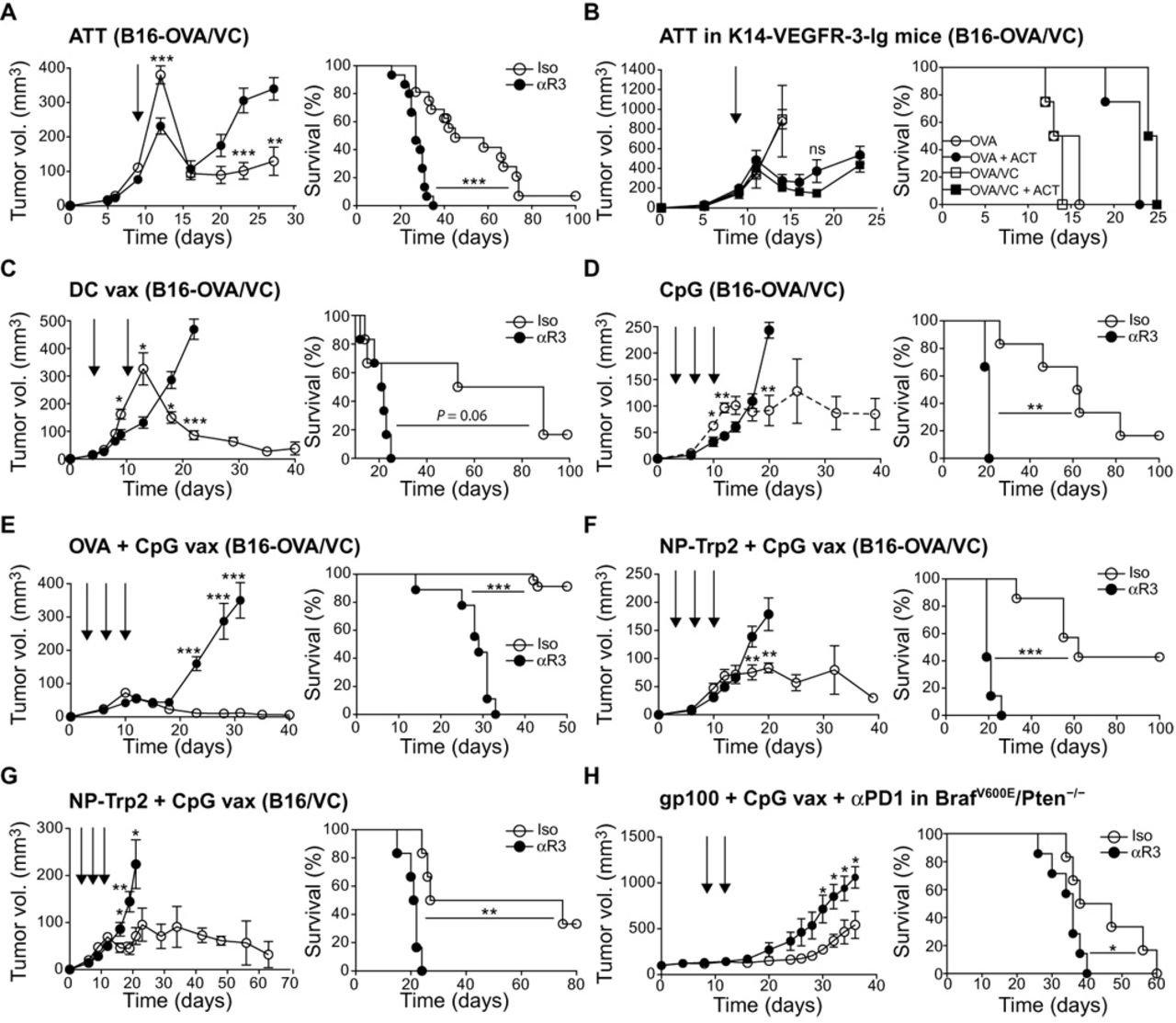
Fig. 2. VEGF-C/VEGFR-3 signaling increases responsiveness of melanoma to immunotherapy.
Tumor growth and survival of three different melanoma models treated with control (Iso) or αR3-blocking antibodies receiving different immunotherapies (arrows indicate times of administration). (A and B) B16-OVA/VC tumors treated with ATT in (A) WT (n ≥ 15) and (B) K14-VEGFR-3-Ig mice that lack dermal lymphatics (n = 4). ns, not significant. (C to F) B16-OVA/VC tumors in WT mice treated with (C) ex vivo activated DCs (DC vax; n = 6), (D) 50 μg of CpG (n = 6), (E) 10 μg of OVA + 50 μg of CpG (n ≥ 8), and (F) 2 μg of Trp2 peptide–conjugated nanoparticles (NP-Trp2) + 50 μg of CpG (n = 7). (G) B16/VC tumors treated with NP-Trp2 + 50 μg of CpG (n = 6). (H) Tamoxifen-induced tumors in BrafV600E/Pten−/− mice treated with CpG + gp100 peptide (days 8 and 12) and anti–PD-1 antibody (day 12 and every 4 days thereafter). Each panel shows data from one (B to D, F, and G), two (E), or three (A) independent experiments. *P < 0.05, **P < 0.01, ***P < 0.001 by two-tailed Student’s t test for growth curves and log-rank (Mantel-Cox) test for comparing survival curves.
ADVANTAGES
ADVANTAGES
-
Generates strong memory T cell responses by targeting lymphatic endothelial cells (LECs) as antigen-presenting cells
-
Promotes localized lymphangiogenesis to enhance targeted antigen delivery and immune activation at the tissue site
-
Reduces systemic inflammation compared to conventional vaccines through localized delivery of lymphangiogenesis inducers
-
Enables generation of effector-memory CD4+ and CD8+ T cells capable of effective immune reactivation
-
Offers dual application potential for both immune activation (e.g., cancer, infections) and immune tolerance (e.g., allergies, autoimmune diseases)
-
Uses engineered lymphangiogenesis factors with matrix-binding domains for sustained, localized activity and minimized side effects
APPLICATIONS
-
Cancer immunotherapy
-
Infectious disease vaccines
-
Allergy desensitization
-
Autoimmune disease tolerance induction