

Nanovaccine That Activates The NLRP3 Inflammasome & Enhances Tumor Specific Activation Of Anti-Cancer Immunity
SUMMARY
- A major attention of vaccine adjuvant development has been focused on development of robust antibody-mediated protection against pathogens. However, such adjuvants have failed to elicit a robust T-cell mediated protection and are thus found to be less efficacious against diseases like malaria, tuberculosis, Ebola and Zika or in immunotherapy.
-
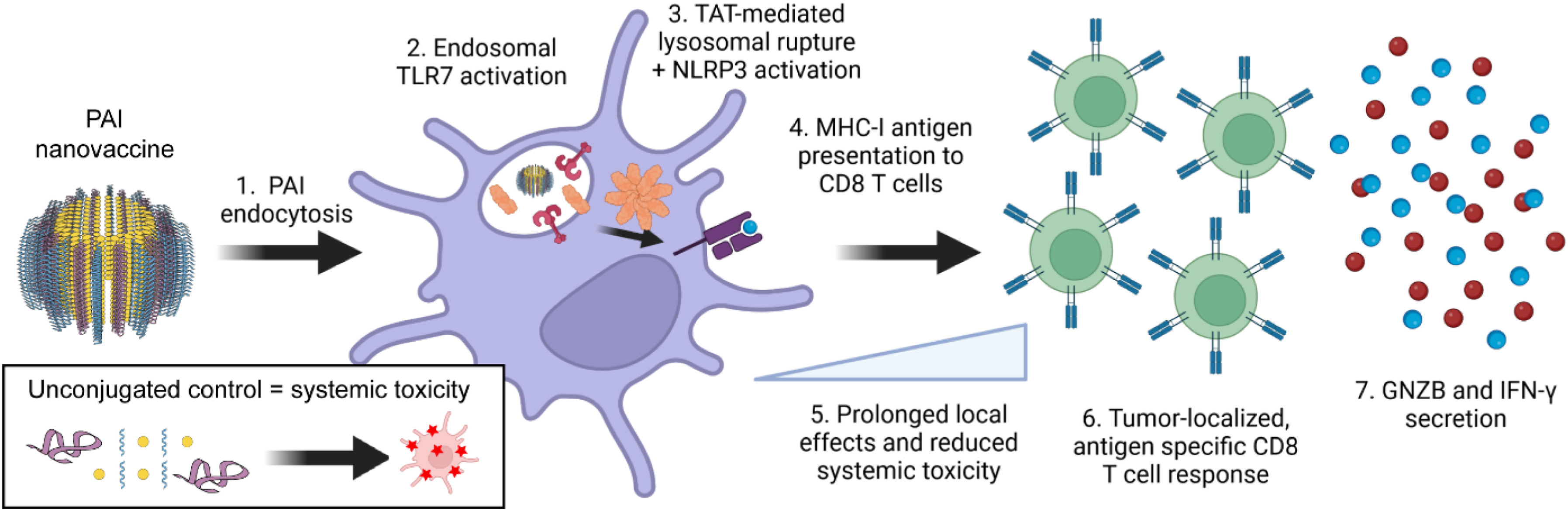
Based on previous reports on the application of IL-1β in enhancing antigen-specific CD4+ and CD8+ responses, we envisioned that inflammasome-activating biomaterials that can produce IL-1β in-vivo can be potentially employed as vaccine adjuvants.
-
The faculty inventor developed a modulable inflammasome activating peptide agonist in a subunit-vaccine formulation along TLR 4 agonist in an oil-in-water emulsion. Further, since altered physico-chemical properties with other known agonists have been observed to induce significant differences in antigen-specific responses, they developed bio-materials by conjugating this peptide to a non-immunogenic polymer scaffold.
-
These biomaterials can be used as an additive (vaccine adjuvant) to enhance or modulate immune response to a vaccine in combination with other known conventional agonists.
FIGURE
ADVANTAGES
ADVANTAGES
-
Enhancement of antigen‐specific T‐cells in response to vaccination
-
Reduced toxicity compared to other inflammasome-based approaches
APPLICATIONS
- Immunotherapy
- Modulation of immune response to vaccine
- Treatment of viral ailments (e.g., malaria, tuberculosis, Ebola, and Zika)