

Amphiregulin Screening And Inhibition Methods For Reducing Metastasis And Enhancing Radiotherapy Efficacy
SUMMARY
Methods to improve radiotherapy by blocking the protein Amphiregulin (AREG), which helps tumors resist treatment and spread. Inhibiting AREG enhances anti-tumor effects and reduces metastasis, making radiotherapy more effective
- Radiotherapy is a foundational treatment for localized solid tumors, with its application increasingly expanding to address oligometastatic and widespread metastatic diseases. To maximize clinical outcomes, radiation is frequently combined with immunotherapies to stimulate a systemic anti-tumor immune response. Despite these aggressive strategies, many patients still experience treatment resistance and the progression of distant metastases.
-
A major limitation of current radiotherapy is that the treatment itself can inadvertently trigger pro-metastatic biological cascades. Specifically, radiation induces the upregulation of Amphiregulin (AREG), which activates the epidermal growth factor receptor (EGFR). This activation reprograms mononuclear phagocytes into an immunosuppressive phenotype, severely impairing natural anti-tumor immunity. Furthermore, this pathway increases CD47 expression on tumor cells, acting as a signal that protects cancer cells from phagocytosis. Compounding this issue, traditional predictors of radiotherapy outcomes- such as tumor size and histology- are static and impossible to modify once treatment begins. Current clinical paradigms fail to address this dynamic, radiation-induced immune evasion, inadvertently facilitating distant metastatic spread.
- The faculty inventor developed methods to enhance radiotherapy efficacy by screening for and inhibiting the upregulation of AREG. During treatments like stereotactic body radiotherapy, AREG expression can increase, activating the EGFR and creating an immunosuppressive environment. This cascade upregulates CD47 on tumor cells, preventing immune clearance and facilitating metastasis. The strategy includes monitoring patients for this AREG spike and administers targeted blocking agents to disrupt the signaling pathway. By halting this cascade, the solution prevents the reprogramming of mononuclear phagocytes, reducing radiation-associated distant metastasis and boosting overall anti-tumor immune responses.
-
This approach is highly differentiated because it targets a dynamic, modifiable factor during active treatment rather than relying on static predictors like tumor histology or size. While traditional radiotherapy can inadvertently trigger pro-metastatic pathways, this intervention directly neutralizes that specific resistance mechanism. Unlike broad EGFR blockade strategies, this solution uniquely isolates and inhibits the radiotherapy-induced AREG upregulation responsible for tumor immune evasion. By transforming a treatment-induced vulnerability into an actionable therapeutic target, it offers an adaptable strategy to counteract metastatic progression and significantly improve patient outcomes.
FIGURE
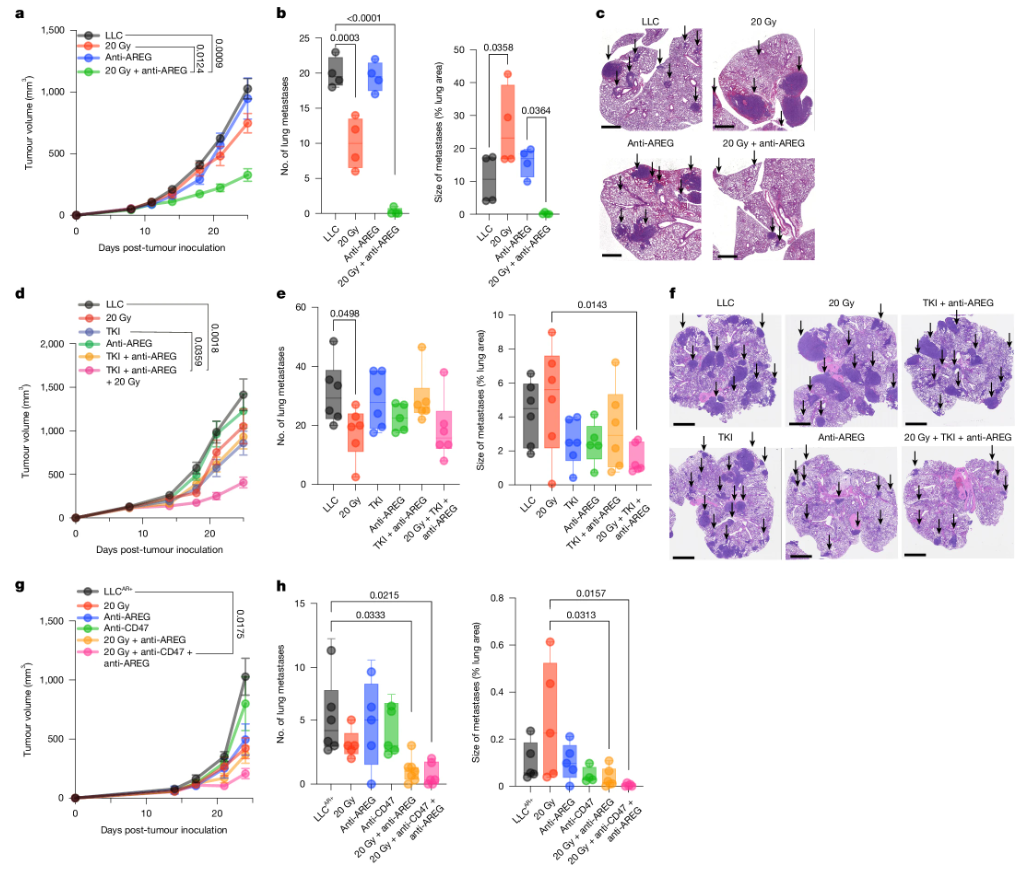 AREG blockade reduces metastasis size in combination with ionizing radiation, EGFR-TKI and anti-CD47 immunotherapy
ADVANTAGES
ADVANTAGES
-
Enhances the overall anti-tumor efficacy of standard radiotherapy treatments
-
Suppresses radiation-induced distant metastasis and prevents tumor resistance
-
Restores the immune system's ability to clear cancer cells by preventing the upregulation of the CD47 "don't eat me" signal
-
Disrupts immunosuppressive pathways by preventing the harmful reprogramming of mononuclear phagocytes
-
Provides a dynamic, modifiable intervention strategy that can be administered and adjusted while radiotherapy is already underway
-
Offers strong synergistic potential to improve patient outcomes when combined with immune checkpoint blockade (ICB) therapies
APPLICATIONS
-
Radiotherapy efficacy enhancement
-
Metastasis prevention therapeutic
-
Radiotherapy companion diagnostic test
-
AREG biomarker monitoring assay
-
AREG inhibitor adjunct therapy
PUBLICATIONS