

Antibody-Targeted Enzymatic Chemoprotection
SUMMARY
-
Cytotoxic chemotherapy involves drugs that inhibit cellular division, killing or blocking the growth of cancer cells. However, chemotherapy blocks the growth of noncancerous cells, which causes an assortment of adverse side-effects, including hair loss, nausea/vomiting/abdominal, fatigue, bleeding, and risk of infection (immunosuppression).
-
These side-effects can be crippling and life-threatening, which limits the dosage and intensity of chemotherapy regimens in practice. Consequently, the therapeutic window may be too narrow for effective and tolerable treatment. Targeted chemotherapy addresses this challenge with monoclonal antibodies that guide attached chemotherapeutic agents to cells that express known molecular cancer markers. However, many malignant tumors do not exhibit targetable disease markers- and those that do often exhibit markers heterogeneously, which can lead to tumor recurrence and drug resistance.
-
The faculty inventors have developed a novel cancer treatment platform using antibody-targeted enzymatic chemoprotection (ATEC) to reduce the adverse effects of cytotoxic chemotherapy on noncancerous cells while maintaining drug efficacy on malignant cells. ATEC inverts the approach of targeted chemotherapy to instead focus on selective protection of healthy tissues from cytotoxic compounds.
-
In ATEC, an antibody fragment that binds to a molecular marker of a healthy tissue is conjugated to an enzyme that degrades a particular chemotherapeutic agent. This antibody-enzyme conjugate is administered to a patient prior to chemotherapy, coating healthy cells with chemoprotective enzymes. The toxic chemotherapeutic drug can then be administered and will accumulate in malignant cells but degrade in healthy cells. This strategy enables the use of higher doses and more intense treatment schedules of cytotoxic chemotherapy while limiting its distressful and life-threatening adverse effects.
FIGURE
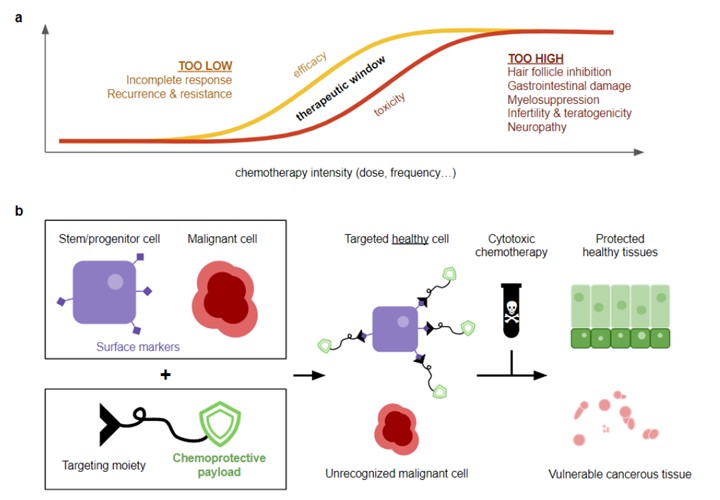
Molecularly-targeted chemoprotection widens the therapeutic window of cytotoxic chemotherapy by selectively protecting healthy tissues from toxicity
ADVANTAGES
ADVANTAGES
-
Widens therapeutic window to make higher doses more tolerable for patients
-
Flexibility to use various molecular markers of healthy cells and different chemotherapy-enzyme pairs (or combinations)
-
Simplicity of administration, without requiring ex vivo cell engineering and transplants
-
Inexpensive treatment development
-
Systemic cytoprotective effects on many tissue types
APPLICATIONS
- Oncology
- Chemotherapy