

Use Of Bacteriophages As Antimicrobial Agents Aagainst Klebsiella Pneumoniae
SUMMARY
- Klebsiella infections are a major and growing clinical threat, particularly in hospital-acquired and device-associated settings, where multidrug resistance severely limits antibiotic options. Existing antibiotics disrupt commensal microbiota, drive resistance, and often fail against carbapenem-resistant strains. There is a clear unmet need for pathogen-specific antibacterial strategies that are effective, durable, and compatible with modern clinical workflows.
-
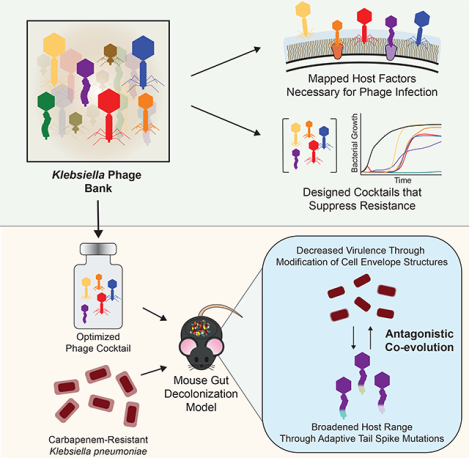
The disclosed technology uses genetically characterized, lytic bacteriophages (alone or in rationally designed combinations) to selectively infect and kill pathogenic Klebsiella strains. Phages are selected and evolved for favorable adsorption kinetics, pH tolerance, and reduced resistance development, with supporting data demonstrating delayed or stochastic resistance when phages are combined. The invention further extends phage use to coated medical devices and kits, enabling both therapeutic and preventative deployment.
FIGURE
ADVANTAGES
ADVANTAGES
-
High specificity: Targets pathogenic Klebsiella without broad microbiome disruption
-
Activity against drug-resistant strains: Effective where antibiotics fail
-
Reduced resistance emergence: Phage combinations delay or prevent resistance development
-
Versatile formulations: Injectable, topical, oral, and device-coating formats supported
-
Genomically defined assets: ≥99% sequence identity enables IP clarity and manufacturing control
PUBLICATIONS
- Shown effective in vitro and in vivo studies