

Engineered Mutator tRNAs For Correcting Missense Genetic Defects And Inducing Cancer Cell Death
SUMMARY
Engineered tRNAs with altered anticodons and chemical modifications deliver the correct amino acid at mutated codons to restore protein function in genetic diseases or induce lethal mistranslation in cancer cells, supported by tissue-specific expression systems.
- The translation process in cells relies on transfer RNAs to deliver specific amino acids in response to mRNA codons, ensuring precise protein synthesis. Missense mutations, which replace one amino acid with another, can disrupt protein folding, stability, and function, leading to a wide range of genetic diseases, including Sickle Cell Anemia, Tay-Sachs, and certain ataxias, as well as contributing to oncogenic processes. Existing therapeutic options, such as enzyme replacement or pharmacological chaperones, typically target downstream effects and often fail to fully restore native protein activity. This gap underscores the need for strategies that directly correct amino acid misincorporation during translation, thereby addressing the root cause of diverse disorders at the molecular level.
- Current methods aimed at correcting missense mutations include gene editing technologies like CRISPR-Cas systems and antisense oligonucleotides for exon skipping, yet these approaches face significant hurdles. Gene editing exhibits challenges in achieving high efficiency and specificity for single-base changes, risk of off-target effects, and immunogenicity. Nonsense suppression therapies designed for premature stop codons do not correct substitution errors, while protein replacement treatments encounter delivery limitations and immune responses against exogenous proteins. Moreover, small-molecule modulators often lack the precision to discriminate between mutant and wild-type proteins, and cannot universally address the vast array of codon changes observed across different diseases.
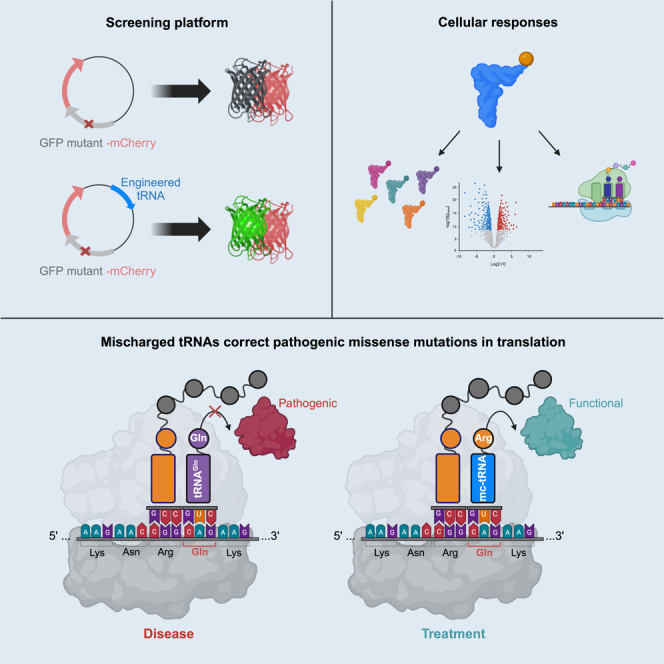
- The faculty inventor developed engineered transfer RNAs (tRNAs) with anticodon sequences reprogrammed to recognize specific missense codons while carrying the correct amino acid. Each tRNA is chemically charged with serine or leucine – chosen for their synthetase flexibility – and features modifications in the variable loop and nucleotide bases to enhance ribosome incorporation and minimize immunogenicity. A DNA construct flanked by optimized RNA polymerase III promoter and terminator elements ensures tissue-specific expression, while FACS-based library screening refines codon specificity in therapeutic contexts.
- Unlike traditional tRNA therapies that suppress premature stop codons, this approach uniquely corrects amino acid substitutions at missense sites, broadening treatment to numerous genetic disorders. The strategic focus on serine and leucine tRNAs exploits their promiscuous synthetases to reassign any anticodon, enabling high-efficiency rescue of native protein sequences. Incorporation of non-standard nucleotides and loop engineering further distinguishes the system by improving stability, reducing immune detection, and increasing ribosomal preference. Additionally, dual applications – precision correction of genetic diseases and deliberate mistranslation to induce cancer cell apoptosis – and tissue-specific promoter design underscore a differentiated therapeutic platform.
FIGURE
ADVANTAGES
ADVANTAGES
-
Direct correction of missense mutations by delivering the correct amino acid during translation
- Applicability to numerous genetic diseases caused by missense variants (e.g., sickle cell anemia, Tay–Sachs disease)
-
Selective cancer therapy through induced proteome-wide mistranslation and apoptosis
-
Tissue-specific expression system to minimize off-target effects and toxicity
-
Enhanced in vivo stability and reduced immunogenicity via engineered tRNA body and modified nucleotides
-
Broad codon targeting flexibility using promiscuous serine and leucine tRNA scaffolds
APPLICATIONS
-
Missense mutation correction therapy
-
Precision oncology tRNA therapeutics
-
Orphan genetic disease treatments
-
Tissue-specific RNA therapeutics
-
Personalized genetic medicine platforms
PUBLICATIONS