

Novel Small Molecules For Treatment Of Breast and Ovarian Cancer
SUMMARY
-
According to the National Osteoporosis Foundation (NOF) approximately 10.2 million adults in the United States have osteoporosis, with an additional 43.4 million having low bone mass.
-
One in eight women will be diagnosed with breast cancer in their lifetime. Because estrogen receptor-α (ERα) is expressed in ~70% of patients, therapeutic intervention by ERα-targeted endocrine therapies remains the leading strategy to prevent progression and/or metastasis in the adjuvant setting. However, the efficacy of these therapies will be diminished by the development of acquired resistance after prolonged treatment regimens.
-
In preclinical models of endocrine-resistant metastatic breast cancers that retain ERα expression, antiestrogens with improved efficacy and potency can overcome resistance to shrink tumors and prevent metastasis. In particular, selective ER degraders or downregulators, which both antagonize ERα actions and induce its degradation, have demonstrated substantial antitumor efficacy in this setting.
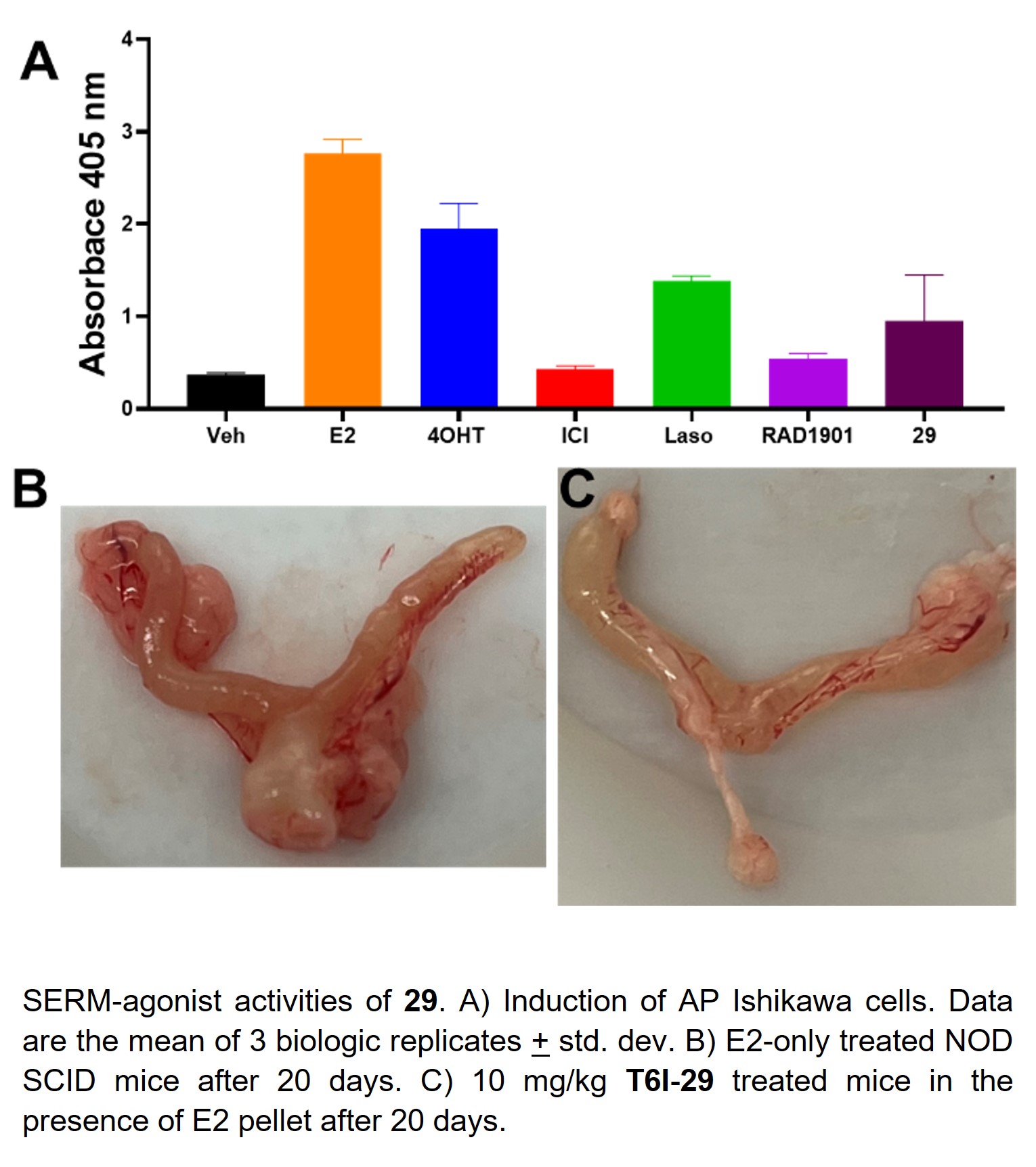
- The faculty inventor developed a set of small molecules novel ERα antagonists for the treatment of breast cancers and other hormone-dependent malignancies along with osteoporosis. In vivo data showed increased survival with no weight loss or adverse reactions, tumor growth inhibition, and attenuated metastasis.
FIGURE
ADVANTAGES
ADVANTAGES
- Molecules adopt a novel orientation in protein and possesses a unique scaffold compared with other antiestrogens.
- Harbor unique pharmacologic profiles.
- Potential to significantly improve tissue-specific activities that are important drivers of side effects.
APPLICATIONS
- Breast cancer
- Ovarian cancer
- Osteoporosis
- Preclinical in vivo