

Hydrocarbon-Stapled Peptides To Inhibit SARS-CoV-2 Viral Infection
SUMMARY
-
The SARS-CoV-2 virus spreads by binding its spike protein to the human angiotensin-converting enzyme 2 (hACE2) protein expressed at the cell surface of lungs, arteries, heart, kidney, and intestines.
-
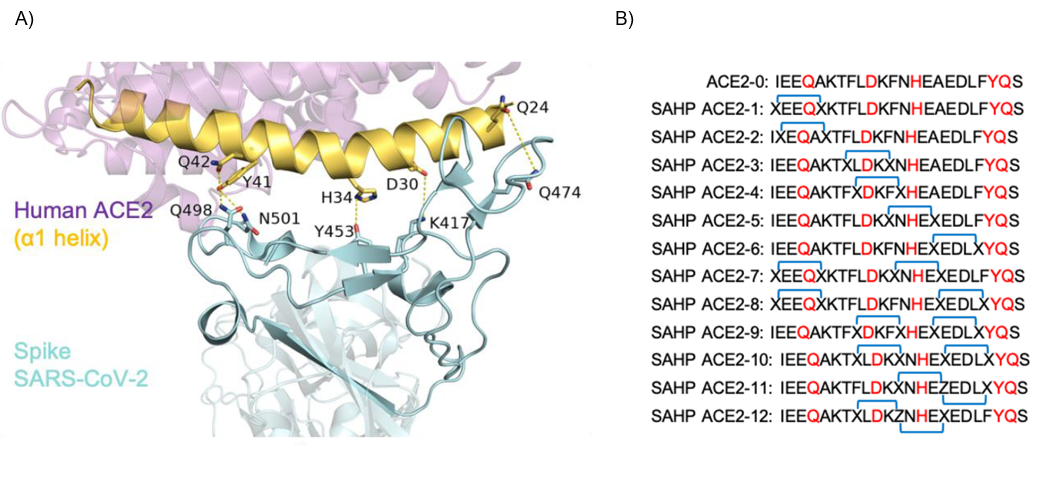
The inventors have developed 12 hydrocarbon stapled peptides that bind to the viral spike protein. Delivered by nanoparticles, these peptides mimic the human ACE2 receptor, which SARS-CoV-2’s spike protein binds to in order to enter the host cell.
-
Their single and double-stapled hydrocarbon peptides maintain their secondary shape at a wide range of biologically relevant temperatures. They inhibit binding and entry of the SARS-CoV-2 virus through molecular mimicry.
-
The inventors aim to further develop hydrocarbon-stapled peptides as intravenous and nebulized nanocarriers for COVID-19 drugs.
FIGURE
ADVANTAGES
ADVANTAGES
- Addresses protein-protein interaction (PPI) between RBD and hACE2 to directly inhibit SARS-CoV-2 viral infection.
- Superior bioavailability, proteolytic resistance, and target cell delivery compared to current COVID-19 therapeutic options.
- Hydrocarbon-staple packaging based on previous breakthroughs with peptide amphiphile (PA) and polymersome nanoparticles.
APPLICATIONS
- SARS-CoV-2