

Small Molecule Therapeutics For Inhibiting Carotid Body Hypersensitivity To Treat Sleep-Related Breathing Disorders
SUMMARY
New compounds that inhibit an enzyme to reduce hydrogen sulfide in the carotid body, helping to normalize breathing and prevent sleep apnea by targeting the underlying cause of abnormal breathing during sleep
The Unmet Need: Targeted, mechanism-based treatments that can restore stable breathing
- Sleep-related breathing disorders (SDB), such as sleep apnea, are prevalent conditions characterized by repeated interruptions in breathing during sleep, affecting millions worldwide and leading to significant cardiovascular, metabolic, and neurocognitive complications. The underlying pathophysiology often involves abnormal regulation of respiratory control mechanisms, particularly the carotid body chemoreflex, which senses blood oxygen levels and modulates breathing accordingly. In sleep apnea, hypersensitivity of the carotid body leads to exaggerated responses to hypoxia, resulting in unstable breathing patterns and frequent apneas. Current standard-of-care treatments, such as continuous positive airway pressure (CPAP) devices, are effective in maintaining airway patency but suffer from poor patient adherence due to discomfort, inconvenience, and side effects, creating a pressing need for alternative, more tolerable therapies.
-
Despite advances in device-based and surgical interventions, pharmacological options for SDB remain limited and largely ineffective. Existing drug therapies, including respiratory stimulants and sedatives, often fail to address the root cause of carotid body hypersensitivity and may carry undesirable side effects or risk of dependency. Moreover, these approaches do not specifically target the dysregulated gasotransmitter signaling pathways-such as aberrant hydrogen sulfide (H₂S) production-that contribute to the pathogenesis of sleep apnea. As a result, there is a significant unmet need for targeted, mechanism-based treatments that can normalize carotid body activity and restore stable breathing without the drawbacks of current therapies.
- The faculty inventor developed a new class of small-molecule compounds designed to treat sleep-related breathing disorders, particularly sleep apnea, by targeting the carotid body’s chemoreflex mechanism. The compounds work by inhibiting the enzyme cystathionine-γ-lyase (CSE), which is responsible for generating hydrogen sulfide (H₂S) in the carotid body—a key oxygen-sensing organ. By reducing H₂S production, these compounds decrease carotid body hypersensitivity to hypoxia, a major contributor to sleep apnea. The lead compound, L-propargylglycine (L-PAG), and its more potent derivatives have demonstrated strong efficacy in preclinical models, normalizing breathing patterns and preventing apneas. These derivatives offer improved potency, bioavailability, and pharmacokinetic profiles, and ongoing development includes fluorinated analogs with further enhanced properties. The compounds can be administered orally or intraperitoneally and have been validated in animal models that closely mimic human sleep apnea.
FIGURE
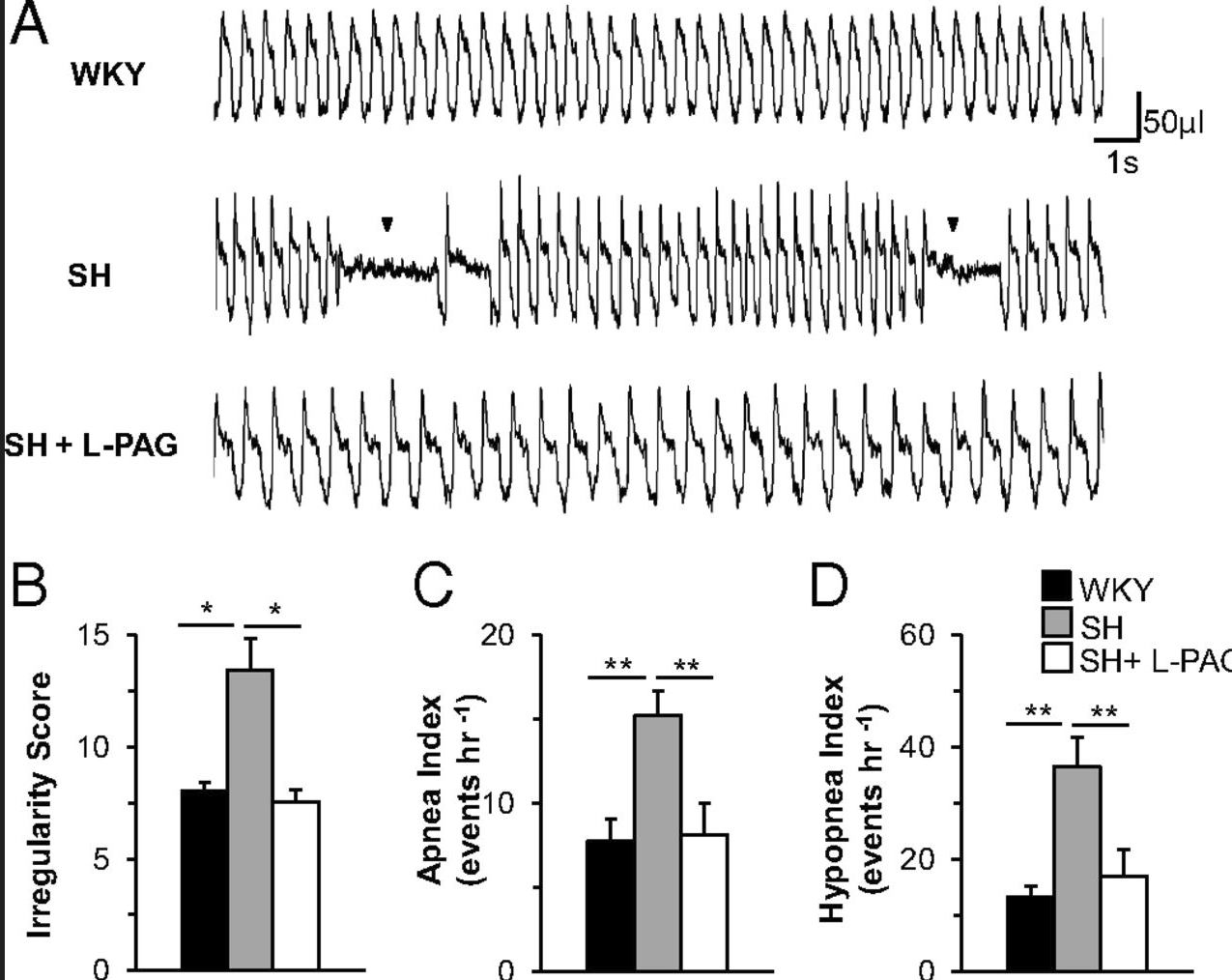
l-PAG prevents apneas in prehypertensive spontaneously hypertensive (SH) rats. (A) Examples of breathing patterns in 4-wk-old male WKY, SH, and l-PAG–treated (30 mg/kg i.p.) SH rats. Arrowheads in the Middle panel indicate apneas. Shown are (B) irregularity score, (C) apnea index, and (D) hypopnea index. Data are mean ± SEM for WKY, SH, and l-PAG–treated SH rats (n = 8 each). *P < 0.05; **P < 0.01.
ADVANTAGES
ADVANTAGES
-
Effectively treats sleep-related breathing disorders, including both central and obstructive sleep apnea
-
Targets and reduces carotid body hypersensitivity to hypoxia by inhibiting cystathionine-γ-lyase (CSE), lowering excessive hydrogen sulfide (H₂S) signaling
-
Offers a pharmacological alternative to continuous positive airway pressure (CPAP) therapy, addressing a major unmet medical need
-
Oral and intraperitoneal administration routes are feasible, enhancing therapeutic flexibility
-
Development of fluorinated derivatives promises further optimization and enhanced therapeutic profiles
APPLICATIONS
-
Central sleep apnea therapy
-
Obstructive sleep apnea therapy
-
Sleep-related breathing disorder drugs