

Peripherally Restricted Κ-Opioid Receptor Agonist Co-Formulation For Preventing Opioid-Induced Respiratory Depression
SUMMARY
An opioid painkiller combined with a peripherally restricted κ-opioid receptor agonist stimulating the carotid body to prevent opioid-induced respiratory depression, enhancing breathing without affecting pain relief or causing central side effects
- Opioid medications are indispensable for managing severe pain, but their widespread use is complicated by a critical safety concern: opioid-induced respiratory depression (OIRD). This life-threatening side effect, where opioids suppress the body's natural breathing drive, is the primary cause of death in both accidental overdoses and therapeutic settings. There is an urgent need for strategies that can mitigate OIRD without compromising the essential analgesic benefits opioids provide, thereby enhancing patient safety and reducing mortality.
-
Existing methods to counteract OIRD face substantial challenges. Many interventions, such as general respiratory stimulants, often come with a range of undesirable systemic side effects, including cardiovascular complications or convulsions. Other approaches designed to stimulate breathing can inadvertently interfere with the very pain relief opioids are intended to provide, or they demonstrate limited efficacy in robustly increasing respiratory drive. Furthermore, some peripherally acting agents still risk central nervous system penetration, leading to unwanted effects like sedation or dysphoria, thus failing to offer a truly safe and targeted solution.
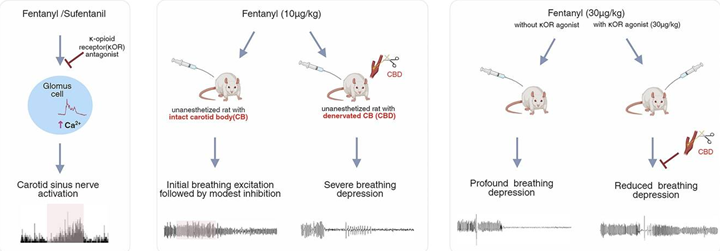
- The faculty inventor combined a mu opioid receptor agonist with a chemically modified, peripherally restricted kappa opioid receptor (KOR) agonist to counteract OIRD. It specifically targets the carotid body's glomus cells, which exclusively express KORs. Stimulation of these KORs increases carotid body neural activity and glomus cell calcium levels, thereby enhancing respiratory drive. The KOR agonist is engineered not to cross the blood-brain barrier, preventing central nervous system effects such as sedation or dysphoria, allowing for co-administration with opioid analgesics in a single formulation.
-
This approach is highly differentiated by its precise targeting and mechanism. While opioids cause OIRD by acting on central mu opioid receptors, this technology leverages the unique discovery that the carotid body is stimulated by KORs to enhance breathing. Unlike previous strategies that often have undesirable side effects or interfere with analgesia, this peripheral KOR activation specifically counteracts respiratory depression without affecting central pain relief. By restricting the KOR agonist to the periphery, it avoids central nervous system side effects associated with KOR activation, offering a safer and more effective means to prevent opioid-related mortality.
FIGURE
ADVANTAGES
ADVANTAGES
-
Prevents opioid-induced respiratory depression (OIRD), the leading cause of opioid overdose death
-
Maintains the analgesic effects of opioid medications without interference
-
Minimizes CNS side effects such as sedation, dysphoria, and hallucinations due to peripheral restriction
-
Enables co-formulation with opioid analgesics for improved respiratory safety in a single medication
APPLICATIONS
-
Safer opioid painkillers
-
Prevent opioid overdose
-
Post-surgical pain safety
-
Chronic pain management safety
-
Hospital opioid safety