

Targeting TGFβ Signaling for Enhancing Cancer Radiotherapy and Immunotherapy Efficacy
SUMMARY
The method leverages a negative regulator to inhibit TGFβ signaling in myeloid cells, potentially enhancing the efficacy of radiotherapy and immunotherapy in cancer treatment by reducing immune suppression.
The problem: Radiation simultaneously induces biological effects on cancer cells and elicits an immune response. However, the immunogenic effects of radiotherapy are counterbalanced by immune suppressive effects and thereby contribute to treatment failure
- Cancer immunotherapy and radiotherapy are areas of intense research due to their potential to effectively treat various types of cancer. One of the critical regulatory molecules in these therapies is the transforming growth factor-beta (TGFβ), an anti-inflammatory cytokine with pleiotropic roles in crucial cell functions.
-
Though TGFβ has been identified as a promoter of cancer progression and a significant target for cancer therapies, its intricate involvement in cell signaling complicates the development of successful treatments. Particularly, TGFβ signaling is essential for T cell survival, which adds another layer of complexity. Despite substantial interest and research in targeting TGFβ signaling pathways, there have been limited successes in translating these findings into effective clinical solutions.
-
Current approaches to blocking TGFβ signaling, such as using blocking antibodies, have shown disappointing results in clinical trials. Targeting TGFβ signaling is further complicated by the fact that directly inhibiting TGFβ can have off-target effects and may also interfere with its necessary roles in other biological processes. Additionally, the lack of specificity in current treatments means that healthy cells can be adversely affected, diminishing the overall efficacy and safety of the therapy.
-
Innovative approaches are required to enhance the precision of TGFβ targeting, particularly in the context of myeloid-derived suppressor cells (MDSCs), which are often enriched in tumors and contribute significantly to immune suppression. Improving the targeting of TGFβ signaling specifically within these cells would represent a considerable advancement in cancer treatments, potentially increasing the effectiveness of both radiotherapy and immunotherapy.
The proposed solution: Combined immune checkpoint and MDSC inhibitors during radiotherapy to overcome tumor radioresistance and improve outcomes for cancer patients
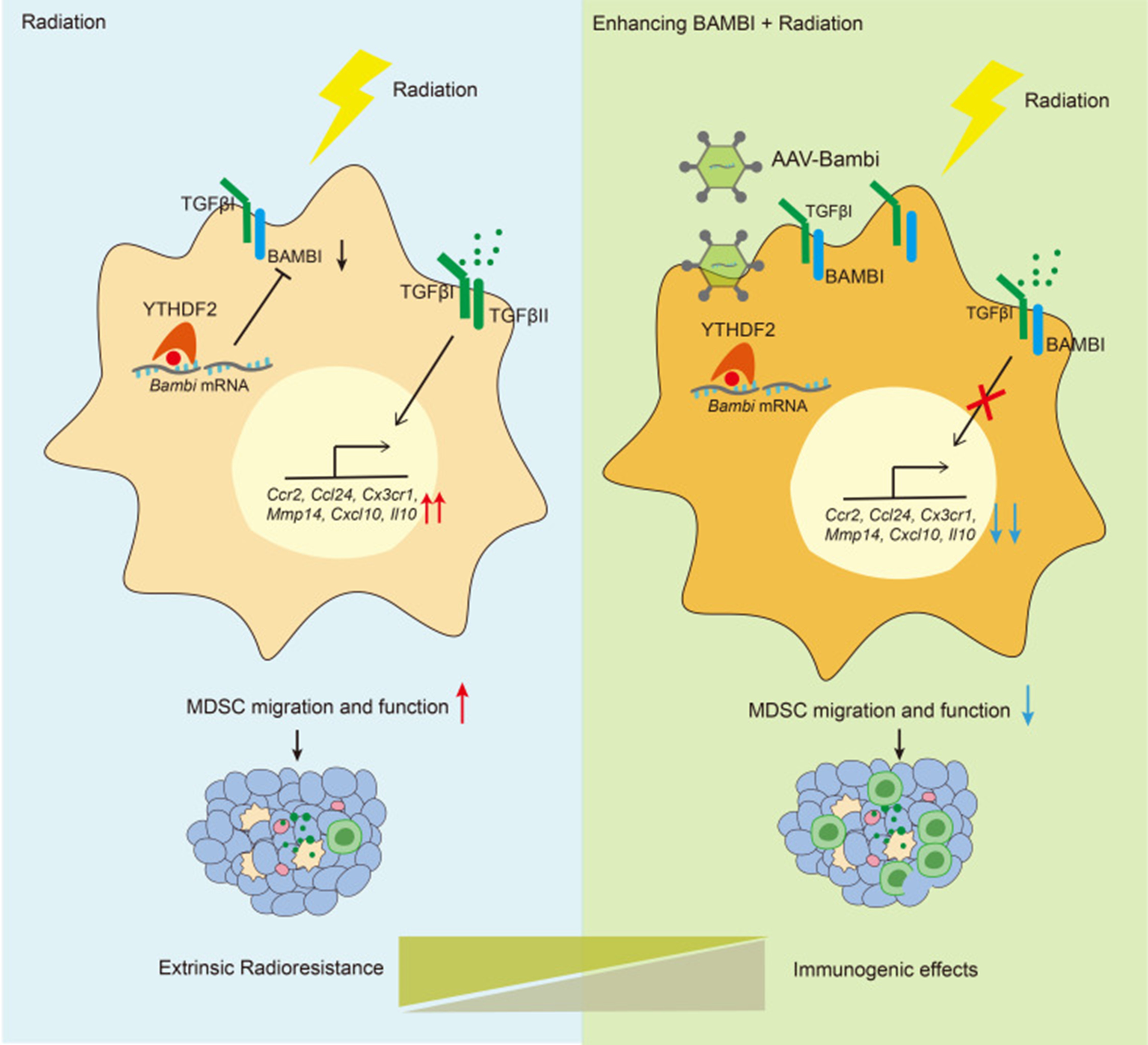
- The faculty inventor, Ralph Weichselbaum, established a method around the modulation of TGFβ signaling in myeloid-derived suppressor cells (MDSCs) to enhance cancer treatment efficacy. The method focuses on BAMBI, a decoy receptor that disrupts TGFβ signaling. Research demonstrates that radiation therapy decreases BAMBI expression in myeloid cells which leads to the degradation of BAMBI transcripts.
-
Over-expressing BAMBI in MDSCs not only reduces their migratory and suppressive capacities but also, when combined with radiation or immunotherapy, enhances treatment efficacy. This approach involves using BAMBI-enriched myeloid cells or delivering BAMBI through AAV vectors, which preferentially target phagocytic myeloid cells prevalent in tumors.
FIGURE
ADVANTAGES
ADVANTAGES
-
Enhances efficacy of radiation therapy and/or anti-PD-L1 treatments
-
Reduced off-target effects, targets TGFβ signaling specifically in myeloid or MDSCs
-
Utilizes AAV or lipid particle delivery for targeted uptake
-
Addresses the predominant source of immune suppression in tumors
APPLICATIONS
- Radiotherapy
- Immunotherapy
PUBLICATIONS