

New Class of Biocompatible and Flexible Optoelectronic Devices For Next Generation Pacemakers
 SUMMARY
-
Electrode-based electrical stimulation underpins several clinical bioelectronic devices, including deep brain stimulators and cardiac pacemakers. Pacemaker therapy improves quality of life and reduces mortality rates. Despite significant advances, current pacemaker therapies are fraught with risks.
-
With conventional endocardial pacing, complications mainly arise from the transvenous lead or subcutaneous generator pocket. Transvenous lead-related complications include venous obstruction, tricuspid regurgitation, and endocarditis, which are linked to a mortality rate of 12% to 31%. Conventional endocardial leadless pacemakers, which avoid wire-related complications, face their own challenges.
-
Epicardial (outer heart wall) pacing is used for patients with anatomical constraints where intravenous access is limited, such as growing children and patients with congenital heart disease. For these patients, endocardial pacing is not an option. However, traditional epicardial systems are more likely to develop lead failure, primarily by exit block and lead fracture, and are thus unsuitable for regular dual chamber stimulation.
-
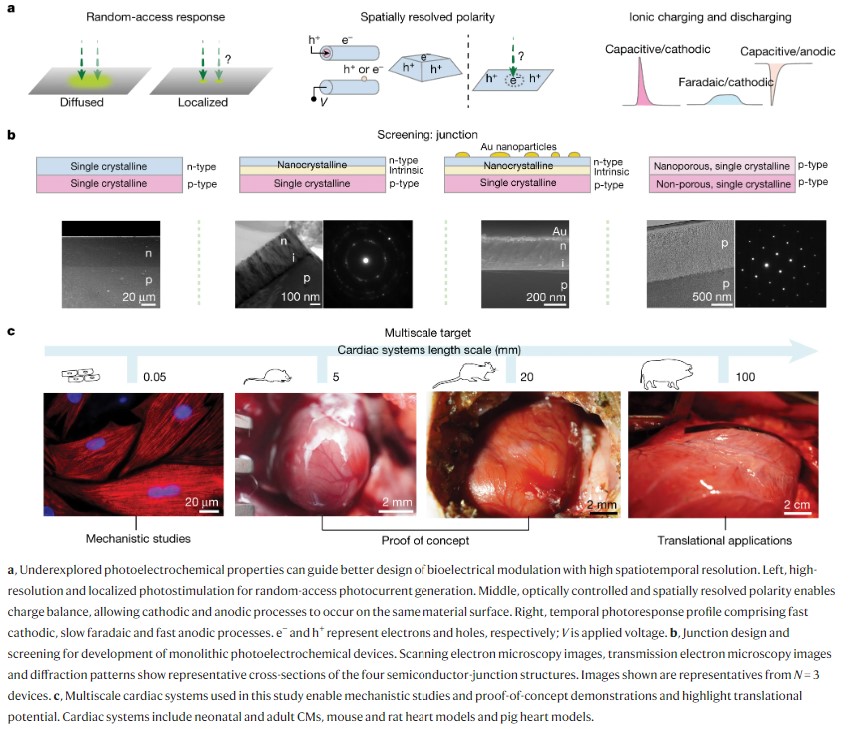
Optical biointerfaces where light is converted into electrochemical stimuli, offer much needed solutions to lead-associated complications, such as infection, thrombosis, and anatomical position limitations. The faculty inventor developed a new class of biocompatible and flexible optoelectronic devices based on semiconductor heterojunctions for optical epicardial pacing in vivo. As the device is positioned outside the heart without any direct connection to the heart interior, potential risks associated with placement of intravenous cardiac leads, including vein stenosis and lead extraction complications, are eliminated.
FIGURE
ADVANTAGES
ADVANTAGES
-
Can be placed anywhere on the heart
-
Free of lead-associated limitations
-
Improved treatment in patients with anatomical constraints where intravenous access is limited
-
Superior localization of photostimulation in tissues
-
Capable of stimulating multiple sites with appropriate timing, offering a leadless route to cardiac resynchronization therapy
-
Scalability- more efficient, safer, lighter, and smaller than existing pacemakers
APPLICATIONS
- Next-generation pacemakers
- Demonstrated successful photostimulation of hearts in vivo in mouse, rat, and pig models