

Universal TaqMan-Based Detection System for RNA Quantification
SUMMARY
- Reverse transcriptase quantitative PCR (qPCR) effectively quantifies coding and noncoding RNA expressions in cells and tissue samples. Among various RT-qPCR detection systems, SYBR Green-based system is most commonly used, although it often lacks desirable specificity; fluorescent probe-based qPCR (e.g., TaqMan) offers high sensitivity and specificity, but its utility is limited by high costs of probe synthesis.
- The current technology is a universal TaqMan-based detection system, that allows cost-effective analysis of coding and noncoding transcriptomics, with broad applications in research and clinical diagnostics.
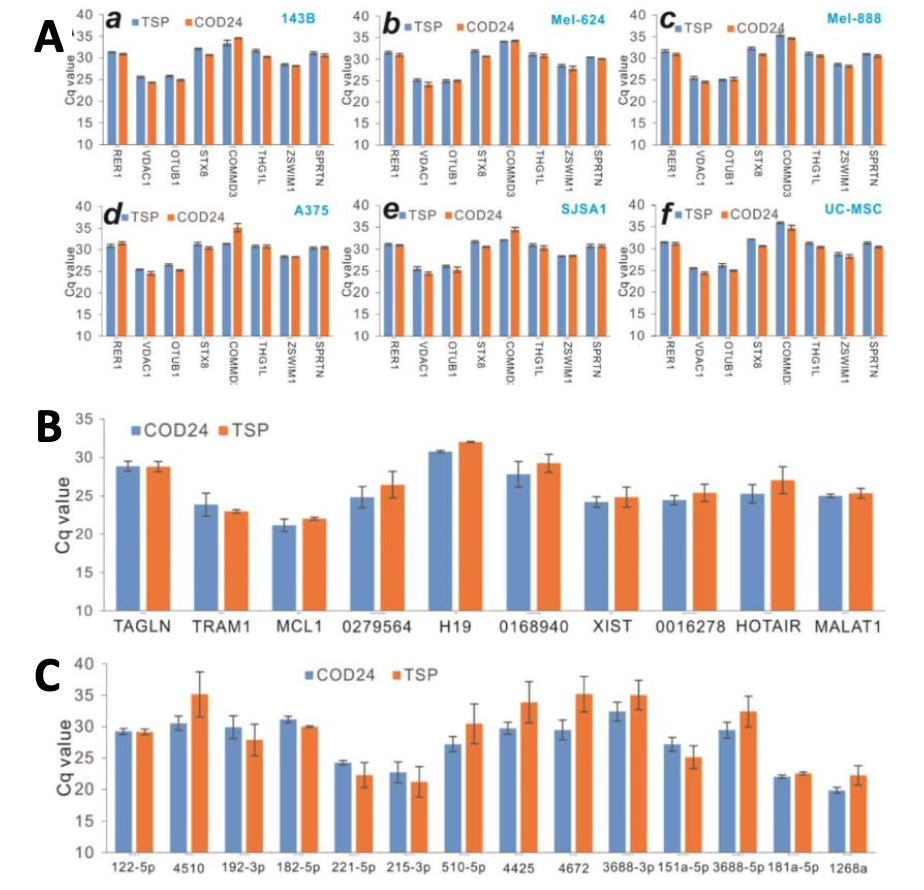
- The inventor designed five degenerate hairpin primers that contain the same hairpin and universal TaqMan recognizing sequences, and randomized nucleotides at the 3’-end. These primers underwent four rounds of linear regression-based machine learning analysis to identify the optimal DHP mix (COD24). COD24 replicated transcript-specific hairpin primers in mRNA quantification and removes the necessity of using transcript-specific primers. The COD24 system was further validated in quantifying lncRNAs and miRNAs with high sensitivity and specificity.
- Using universal TaqMan-based probes can drastically reduce the cost associated with probe synthesis.The current technology should be readily adapted for other forms of fluorophore probe-based qPCR detection chemistry.
FIGURE
ADVANTAGES
ADVANTAGES
- Cost Effective
- Streamline Probe Design and Synthesis
- Highly Sensitive and Specific
- Detection of Coding and Noncoding RNAs
APPLICATIONS
- Coding and Noncoding Transcriptomic Analysis
- Clinical Diagnostics
- Basic and Translational Research