

New System for the Synthesis of Silicon-Based Materials for Biological Modulation
SUMMARY
- Pure silicon materials with strong photoelectrochemical properties are advantageous to biomodulations devices due to their excellent dielectric properties that are promising in many electrical transmission applications. Synthesis of such materials have previously been completed with dopant modulation but lack efficiency and fast production.
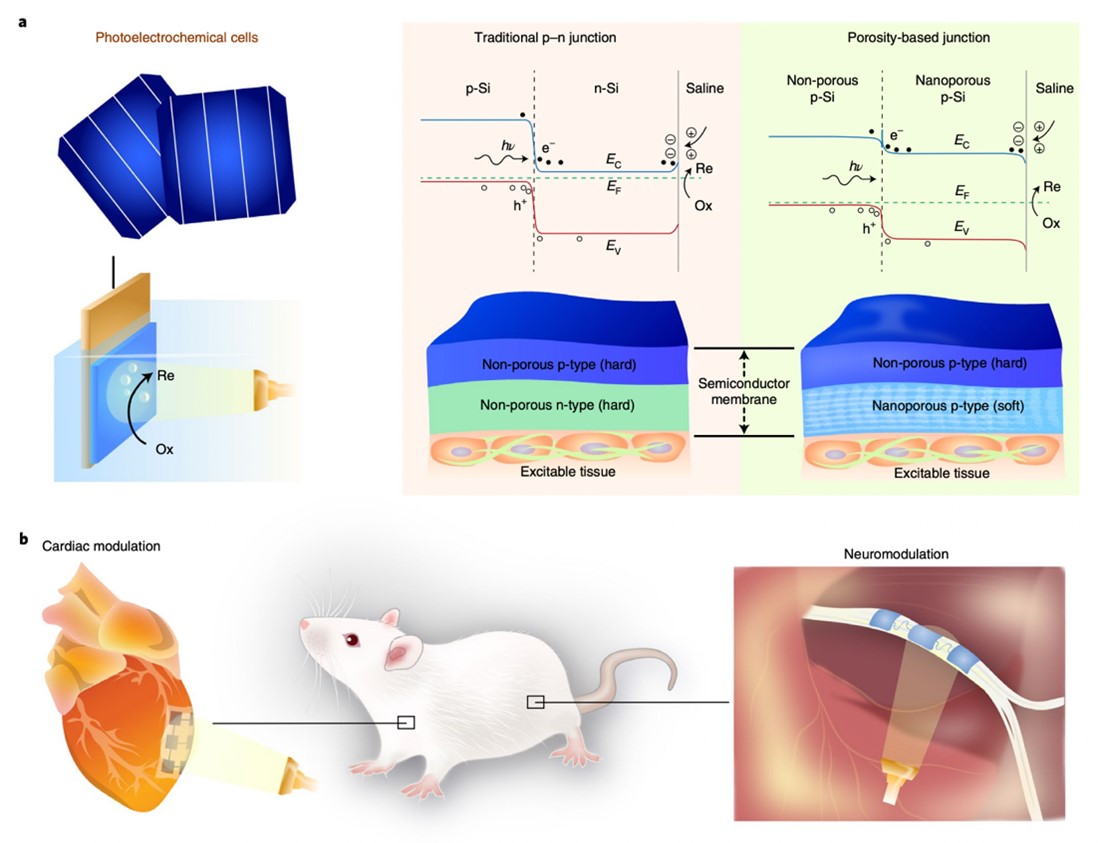
- This technology addresses prior shortcomings by utilizing microstructure engineering over dopant modulation to enable the fabrication of semiconductor heterojunctions. This new synthesis strategy of silicon-based photoelectrochemical materials is fast and efficient and holds a wide variety of applications in biological modulation and energy science.
- This fabrication technique is compatible with the processing of ultrathin, soft, and flexible silicon micro membranes, which are used as interconnect-free biomodulations devices.
- Through ex vivo heart pacing and in vivo sciatic nerve stimulation the utility of such materials was demonstrated. The flexibility of the device was able to contour to the curvilinear wet surface of the heart and sciatic nerve while delivering adequate optical pulses that were recorded through electromyography recordings.
FIGURE
ADVANTAGES
ADVANTAGES
- A microstructure engineering synthesis technique is faster and more efficient
- Performs under ambient temperature and pressure with no need for additional instrumentation
- Enables leadless optoelectronic stimulation of tissues
APPLICATIONS
- Biological Modulation
- Cardiac Pacing
- Peripheral Nerve Regeneration
- Energy Science
PUBLICATIONS