

Profitable Trading Strategies Devised Through Machine Learning
SUMMARY
- Sentimental analysis for financial forecasting has been impeded by the ultra-high dimensional challenge of numerically representing huge troves of text.
- Prior efforts circumvented this bottleneck by reusing word scoring devised for earlier studies, utilizing sentiment values imprecisely matched to context, significantly reducing the value of the results.
- The faculty inventor utilized machine learning to perform sentimental analysis of the archives and text feed of the Dow Jones Newswires over the past several decades. Words in these texts were scored positive, negative, or neutral, as per their correlation with profitable asset returns. These scores were summed for entire articles or feeds to produce sentiment values highly predictive of asset performance.
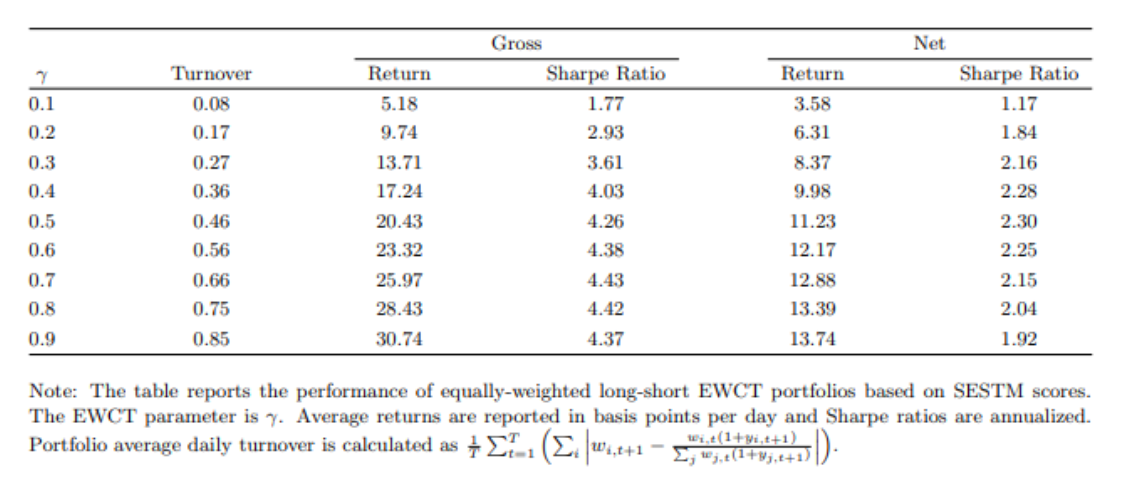
- The close correlation shown between news releases and price values enabled devising a trading strategy operating through buying and selling an equal ratio of assets predicated to perform well or poorly, respectively.
- The results demonstrated robust sentimental analysis capable to being expertly tailored for specific forecasting that both produced accurate financial predictions and surmounted the higher dimensional challenge.
FIGURE
ADVANTAGES
ADVANTAGES
- Accurate forecasts of price changes
- Non-computationally intensive
- Sentimental scoring expertly tuned to specific contexts
APPLICATIONS
- Trading and hedging strategies
- Portfolio management
- Economic planning
PUBLICATIONS
https://www.nber.org/system/files/working_papers/w26186/w26186.pdf