

Mesenchymal Stem Cell And Exosome-Based Therapeutics For Restoring Ovarian Function In Premature Ovarian Insufficiency
SUMMARY
Therapeutic strategy using human mesenchymal stem cells or their exosomes to restore ovarian function and fertility in premature ovarian insufficiency by promoting cell growth, reducing cell death, and enhancing blood vessel formation in the ovaries.
- Premature Ovarian Insufficiency (POI) is a condition characterized by the loss of normal ovarian function before the age of 40, leading to infertility, hormonal imbalances, and significant health consequences for affected women. The causes of POI are diverse, including genetic mutations, autoimmune disorders, environmental factors, and medical treatments such as chemotherapy. The impact of POI extends beyond reproductive health, affecting bone density, cardiovascular health, and psychological well-being. With the increasing prevalence of delayed childbearing and cancer survivorship, the incidence of POI is rising, highlighting the urgent need for effective therapeutic strategies that can restore ovarian function and fertility, rather than merely managing symptoms.
-
Current approaches to treating POI are limited and often unsatisfactory. Hormone replacement therapy can alleviate some symptoms but does not restore fertility or ovarian function. Assisted reproductive technologies, such as egg donation, are often the only option for women wishing to conceive, but these solutions can be inaccessible due to cultural, ethical, or personal reasons. Experimental treatments, including ovarian tissue transplantation and pharmacological interventions, have shown limited success and carry risks such as surgical complications or disease recurrence. Moreover, these approaches do not address the underlying ovarian damage or promote regeneration of the ovarian microenvironment, leaving a significant unmet need for therapies that can both restore ovarian function and support natural conception.
- The faculty inventor utilizes human mesenchymal stem cells (hMSCs) and their secreted products, such as conditioned media and exosomes, to restore ovarian function in cases of premature ovarian insufficiency POI. The approach involves delivering hMSCs or their bioactive secretions either directly into the ovaries or systemically via intravenous infusion. The technology includes rigorously controlled protocols for the preparation, dosing, and administration of hMSC-derived exosome products, ensuring compliance with regulatory standards and enabling comprehensive monitoring of therapeutic outcomes and safety in clinical applications.
-
What differentiates this technology is its multifaceted regenerative mechanism that leverages both the direct cellular effects of hMSCs and the potent paracrine actions of their secreted factors, particularly exosomes. Unlike traditional stem cell therapies that rely solely on cell engraftment and differentiation, this solution harnesses the therapeutic potential of the hMSC secretome to promote tissue repair, angiogenesis, and hormonal balance without permanent cell integration or germline modification—minimizing long-term safety risks. The use of exosome-based products, manufactured under stringent sterile conditions, offers a scalable and less invasive alternative to direct stem cell transplantation, with a clear path toward clinical translation. This comprehensive approach addresses the root causes of POI, including granulosa cell loss and impaired ovarian vascularization, and is supported by robust preclinical, positioning it as a promising and differentiated therapy for women with POI-related infertility.
FIGURE
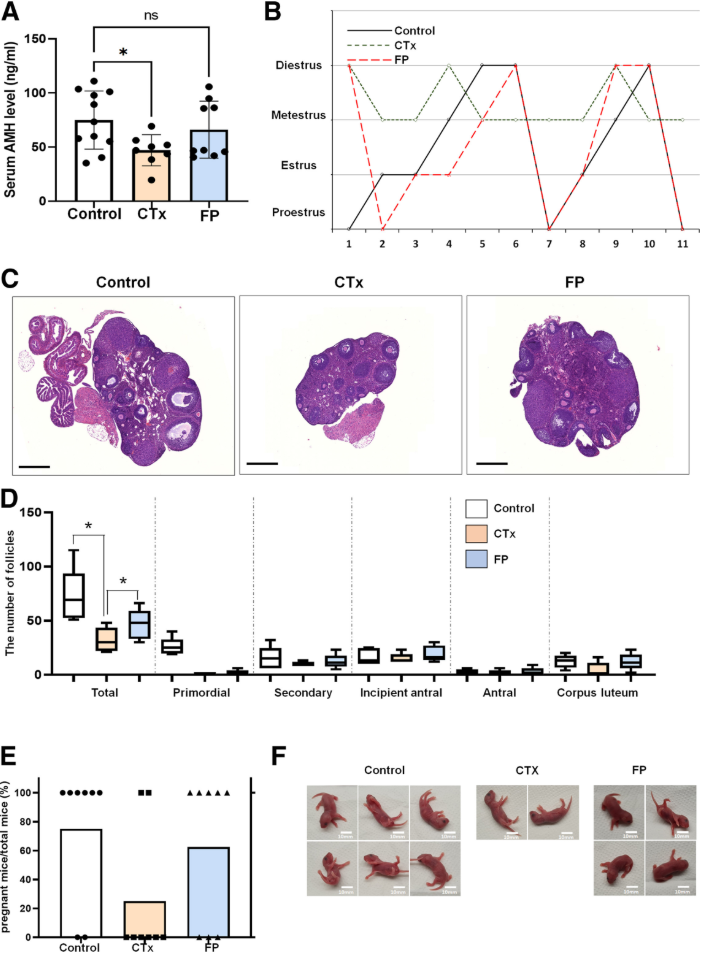
Effect of exosome transplantation before CTx on ovarian function
ADVANTAGES
ADVANTAGES
- Restores ovarian function and morphology in premature ovarian insufficiency
-
Promotes ovarian angiogenesis through upregulation of angiogenic markers and pathways
-
Reduces ovarian cell apoptosis, improving tissue health
-
Demonstrates safety with limited cell distribution, no germline integration, and normal offspring development
-
Offers a non-invasive therapeutic option via MSC-derived exosomes with defined dosing and regulatory compliance
APPLICATIONS
-
Premature ovarian insufficiency treatment
-
Fertility restoration after chemotherapy
-
Ovarian function enhancement therapies
-
Hormonal imbalance correction
PUBLICATIONS
- Preclinical animal models demonstrated the ability to regenerate ovarian tissue, increase healthy follicle numbers, enhance blood vessel formation, and reduce cell death, as evidenced by advanced histological and molecular analyses